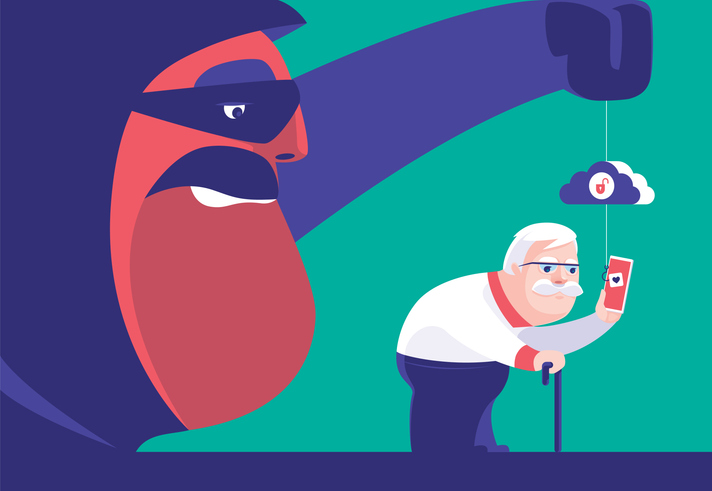
May is just around the corner, and while we’d certainly prefer to be thinking about April showers and May flowers, well, if you’re a community banker, you’re probably thinking more about fraud. May is, of course, a time when the industry is focused on scams and frauds; elder fraud, in particular. The month includes both Scam Survivor Day on May 14 and National Senior Fraud Awareness Day on May 15.
Needless to say, and as we’ve talked about in past blogs such as How sophisticated scams are leading banking customers to slaughter, the frequency and sophistication of cyberattacks on banks and banking customers are growing at an alarming rate. According to the FTC, the average financial loss per scam victim is estimated at nearly $10,000, contributing to more than $12.5 billion in total losses nationwide. And according to Reuters, in AI-powered fraud: 5 trends financial institutions need to understand in 2026: “Financial institutions are seeing a measurable increase in AI-enabled financial crimes, while consumers increasingly expect banks to deploy AI-based security in response. AI has become an essential tool for both fraudsters and those fighting against them.”
Of greatest concern, for what is now nearly 20% of the U.S. population at 61 million individuals, are attacks on the elderly. These attacks are 1) more frequent, 2) easier for the bad actor to execute, and 3) the most financially and emotionally devastating. Nearly 40% of U.S. adults experienced some type of fraud in 2025, and it is estimated that up to 95% of fraud and cybercrime, including bank scams, go unreported.
Ever more frequently, elderly Americans are receiving frantic calls from someone claiming to be a relative in trouble or urgent texts that appear to come from their bank. I’m guessing that everyone reading this has been on the receiving end of at least one of these fraudulent activities. Stories like these are increasingly common; whether it’s an elderly woman losing her life savings after receiving a distress call from her “grandson,” or a business owner unknowingly paying a fraudulent invoice.
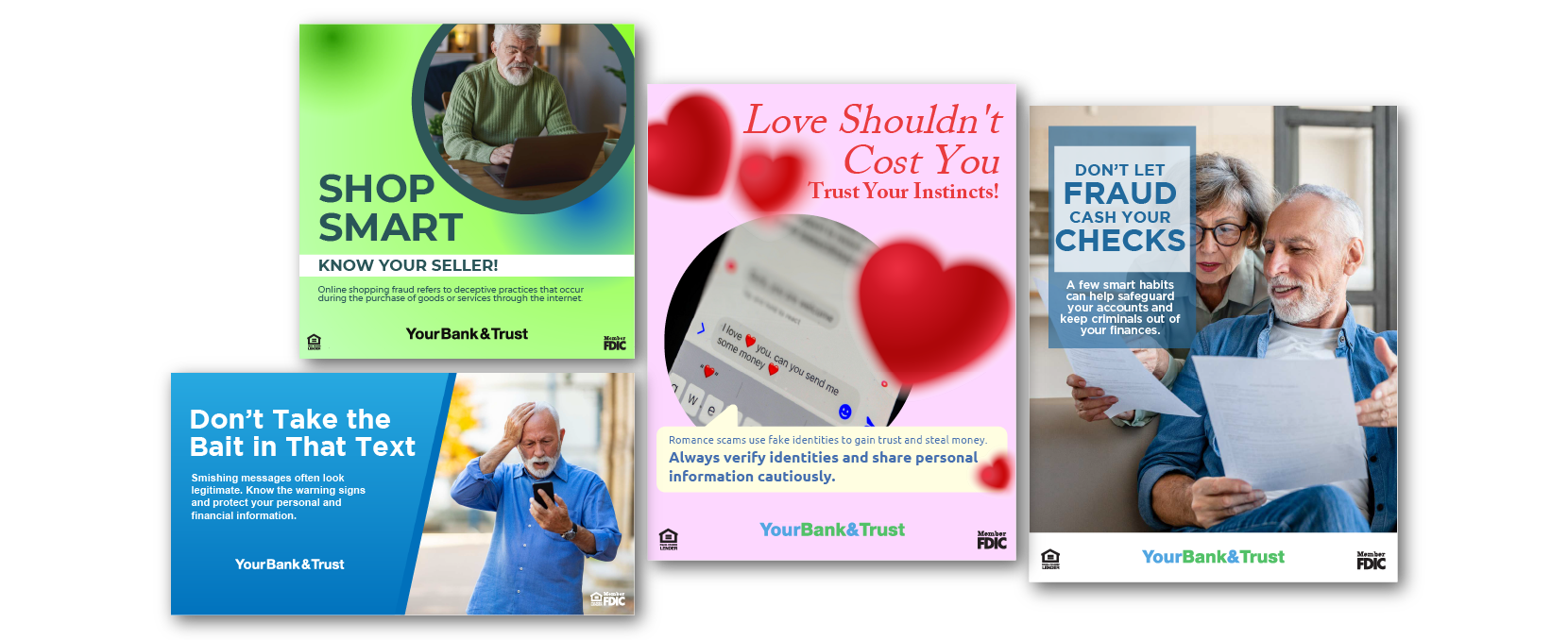
This month, as a community bank marketer, you can do your elderly customers a tremendous service by alerting them to the potential threats from bad actors. Here are just a few of the financial scams your customers should look out for, along with some practical steps to help them protect their money, identity, and peace of mind. FYI, if you’re one of our partners, you can go into the portal and find layouts focused on fraud that you can easily customize with your own copy, images, logo, etc.
AI-Generated “Deepfake” Banking Calls
AI-generated voices have advanced well beyond robotic or choppy speech. Today’s scam calls sound convincingly human, making them difficult to detect. Be on the lookout if the call includes:
- An urgent or threatening tone demanding immediate action
- Requests for personal or account information without proper verification
- Requests for passwords, PINs, or one-time passcodes
- Unusual background noise or overly scripted responses
Fake Payment App Refunds
As peer-to-peer payment apps like Zelle® and PayPal® grow in popularity, scams involving these platforms are growing in popularity as well, with bad actors increasingly posing as individuals or businesses claiming to have made a mistaken payment. Victims of such attempts should be wary of:
- Requests to return money you never received
- Offers to let you keep part of the funds “for inconvenience”
- Requests to verify a refund by sending a small payment first
- Messages impersonating well-known retailers or online marketplaces
Small Business Invoice Spoofing
Of course, not only are the elderly preferred targets for cybercriminals, so are small business owners. Invoice spoofing is a tactic that targets small businesses by impersonating vendors or service providers in hopes of collecting fraudulent payments. Signs of an invoice spoofing scam include:
- Threats of penalties or service disruption if payment is not immediate
- Requests to change payment or wiring instructions via email
- Invoices from unfamiliar vendors or containing spelling errors
- Requests for payment through third-party apps
Subscription Renewals and Auto-Pay Scams
Many of today’s apps and services offer “free trials” and subscriptions that renew automatically. While not technically an illegal scam, subscription service providers often have a way of taking advantage of individuals who don’t take the time to “read the fine print.” And while these charges may seem insignificant, it doesn’t take long for them to quietly add up. Best practices in this area include:
- Reading all cancellation terms carefully
- Setting calendar reminders before trial periods, end
- Reviewing transactions regularly, as well as monthly bank statements
“Emergency” Text Scams Using Real Personal Information
Often referred to as “smishing,” (phishing scams using SMS), emergency text scams use real personal details to create panic and urgency. Scammers may pretend to be a loved one, law enforcement, or a government agency. The common warning signs of a smishing attack include:
- Messages claiming to be from someone who does not normally text you
- Requests to keep the emergency a “secret”
- Unknown or international phone numbers
- Demands for payment using cryptocurrency, gift cards, wire transfers, or third-party apps
Actions to take
Now's a great time to get that fraud awareness messaging out to your customers. Make sure they know that if they even suspect that they may be dealing with a bad actor, it’s critical that they not panic. Using a sense of urgency in order to put victims into panic mode is what cybercriminals count on to succeed. Slow down and stop engaging immediately.
Should your customer receive a text message or email that appears to be less than completely legitimate, i.e., a suspect sender, address, or area code, they should never click on a link, share any personal information, or under any circumstance, send money. If the communication is from their bank, they should instead contact their bank directly using the bank’s verified contact information to report the incident.
Again, reviewing recent transactions, placing alerts, and updating passwords or PINs can help limit potential damage. It’s also important to report the incident to the appropriate authorities, such as the Federal Trade Commission, especially in cases of potential identity theft. For older customers, it can be helpful to involve a trusted family member or advisor before making any decisions. Staying calm and asking for assistance from someone they trust can go a long way in avoiding a costly mistake.
Bank Marketing Center
We’re Bank Marketing Center, the leading subscription-based, automated marketing platform designed especially for community banks. Our mission is to assist bank marketers craft, manage, share, monitor, and distribute topical, compelling marketing communication that builds their brand and grows revenue. We do this by automating the essential marketing functions bank marketers rely upon; content creation, social media scheduling and monitoring, digital asset management, compliance routing, and more.
By working with our 300+ partner banks, along with having spent collective decades in financial services marketing, we know what works and what doesn’t. We know what community bankers need. We monitor industry trends, share what we know, and are continually adding new features to our platform to help our partner banks succeed.
Want to learn more about what we do for bank marketers to help them succeed? You can start by visiting bankmarketingcenter.com. Then, feel free to contact me directly by phone at 678-528-6688 or via email at nreynolds@bankmarketingcenter.com. As always, I welcome your thoughts.