Financial literacy often starts with the simplest lessons: counting coins in a piggy bank, saving a little allowance money, or learning the difference between spending now and saving for later. But for many young people today, those basic lessons aren’t formally taught. As financial products become more sophisticated and digital payments replace cash, the need to help children and teenagers understand how money works has never been greater.
Why early financial education matters
Too many young adults reach their twenties without a clear understanding of budgeting, saving, credit, or interest. Without those core skills, it becomes much easier to fall into debt, struggle with long-term financial planning, or make decisions that limit future opportunities. The numbers help illustrate the challenge. In a 2023 nationwide assessment by the National Financial Educators Council (NFEC), reported by PRNewswire, 52% of teens ages 15–18 failed the National Financial Literacy Test, which sets a passing score at just 70%.
Research also shows that attitudes about money begin forming much earlier than many people realize. By elementary school, children are already developing ideas about how money is earned, how it’s spent, and whether saving matters. Introducing basic financial concepts during those early years can influence financial behavior for decades.
Fortunately, teaching young people about money doesn’t require complex financial theory. The most effective programs focus on practical, everyday ideas: Setting goals, understanding the difference between needs and wants, saving for something meaningful, and recognizing that financial decisions have real consequences.
Community bank team members are uniquely positioned to help deliver those lessons. Unlike large national institutions, community banks maintain close ties to the neighborhoods they serve. Their employees often live in the same communities as their customers, send their children to the same schools, and participate in the same local organizations. That local connection makes financial education efforts feel personal, and often far more impactful.
Turning education into experience
Many forward-thinking community banks are stepping in to help fill the financial education gap. By partnering with schools, nonprofits, and community organizations, banks are finding creative ways to introduce financial concepts early and make them engaging, accessible, and memorable.
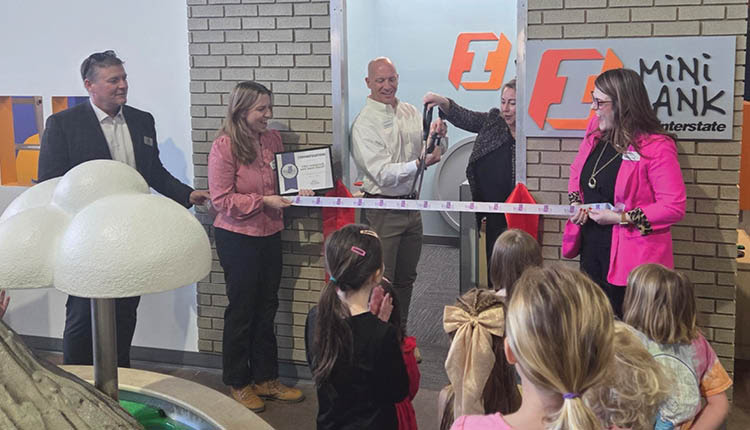
One recent example comes from First Interstate Bank, which partnered with the Wise Wonders Science & Discovery Museum to help young learners explore the basics of banking through interactive play. At the museum’s “Mini Magic City,” children can explore a scaled-down version of a real community. The space includes familiar locations like a grocery store and a medical clinic; and now, thanks to First Interstate, a Mini Bank where kids can step into the roles of bankers and customers.
The exhibit is designed to be hands-on. Children participate in activities like counting money, sorting coins, and completing simple transactions. While the exercises may appear simple, they introduce important ideas about how money moves through everyday life.
For kids, the experience feels like play. For educators and community leaders, it represents an early introduction to real-world financial skills. And for institutions like First Interstate Bank, it’s an investment in the long-term financial well-being of the communities their branches serve.
Making financial concepts real
Programs like the Mini Bank highlight a key principle of effective education: abstract ideas become much easier to understand when they’re tied to everyday experiences.
When children step into a pretend bank branch, they begin to see how deposits, withdrawals, and purchases fit together. They practice counting money and making decisions. They start to understand that money can be earned, saved, and used to buy things that matter to them.
These kinds of experiences also help build confidence. By interacting with financial concepts in a relaxed, low-pressure environment, young learners become familiar with systems that might otherwise feel intimidating later in life. Instead of viewing banks as mysterious institutions, they begin to see them as approachable places that help people manage their money.
For community banks, programs like this create opportunities for meaningful engagement long before a child opens their first account. They help demystify banking while positioning financial institutions as trusted partners in everyday financial life.
The community bank advantage
In many cases, the goal isn’t just to teach children about money. It’s to help them feel comfortable asking questions, making thoughtful decisions, and developing healthy financial habits over time.
Community banks have a natural advantage when it comes to these efforts. Large financial institutions often focus their resources on national advertising campaigns or digital tools. Community banks, on the other hand, have the ability to connect directly with the people and organizations in their local markets.
That connection opens the door to a wide range of opportunities. Bank employees can volunteer in classrooms, helping students understand the basics of saving and budgeting. Banks can sponsor youth events, partner with local nonprofits, or create educational exhibits like the Mini Bank at the Wise Wonders Museum.
Here at Bank Marketing Center, we can help support these initiatives by providing ready-to-use marketing materials that promote financial literacy. From educational ads to observances, these tools make it easier for community banks to share helpful information and reinforce their role as trusted financial partners. Here are just a few examples:
.png)
Building a stronger financial future
Financial literacy isn’t something that develops in a single lesson or workshop. It grows over time through repeated exposure to ideas about saving, spending, and planning for the future. When young people learn how to manage money responsibly, the benefits extend far beyond the individual. Financially confident adults are more likely to build stable households, support local businesses, and contribute to stronger local economies.
By investing in creative financial education programs today, community banks are helping build a foundation for healthier financial communities tomorrow. And sometimes, those lessons begin in the most unexpected places—like a miniature bank inside a children’s museum, where a simple game of counting coins might be the first step toward a lifetime of smart financial decisions.
Bank Marketing Center
We’re Bank Marketing Center, the leading subscription-based, automated marketing platform designed especially for community banks. We are presently helping the marketers at over 300 financial institutions craft and distribute topical, compelling marketing communication that builds trust in their brand, deepen customer relationships, and grow revenue.
We do this by automating the essential marketing functions banks rely upon; content creation, social media scheduling and monitoring, digital asset management, compliance routing, and more.
We also believe in sharing what we know and learn. Whether it’s insights on the latest AI tools, tips for attracting and retaining top talent, a webinar on operational efficiency, or what experts are saying about the future of banking, we’re committed to helping community banks thrive. And by working with our 300+ partner banks, we know what's working and what's not. We know what community bankers need. We see the trends daily and are constantly adding new content to the portal to meet those needs.
Want to learn more about what we do for bank marketers to help them succeed? You can start by visiting bankmarketingcenter.com. Then, feel free to contact me directly by phone at 678-528-6688 or via email at nreynolds@bankmarketingcenter.com. As always, I welcome your thoughts.